May 03, 2024 | Vince Lara-Cinisomo
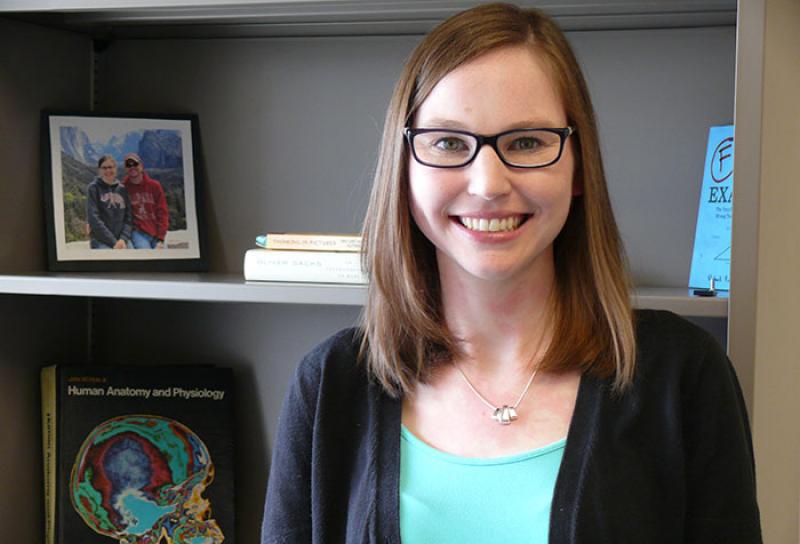
Amy Brummel planned to catch the Illini’s Homecoming football game against Wisconsin last October and maybe grab some food at the College of Applied Health Sciences’ pregame tailgate. She had no idea it would lead to a research collaboration.

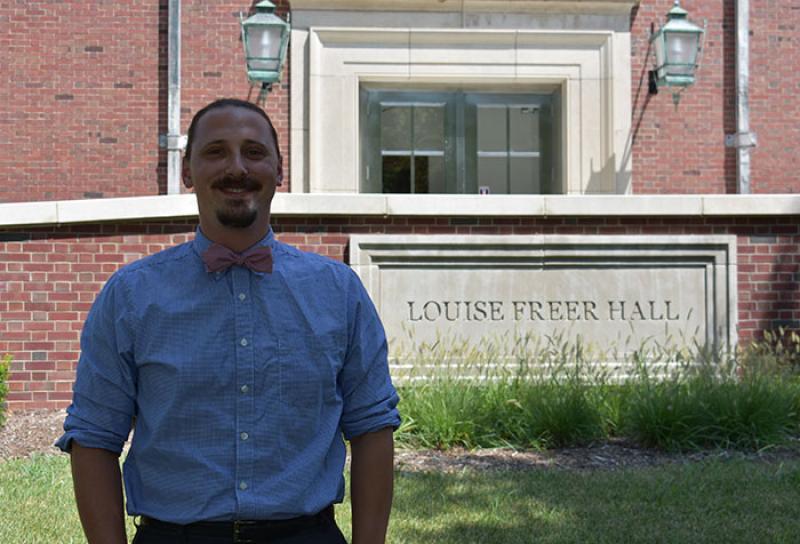
Brummel, a two-time alumna (B.S. in 1994, M.A. in 1997) of the Department of Speech and Hearing Science, has established a clinical research partnership with SHS Assistant Professor Meaghan McKenna to evaluate a literacy intervention protocol she developed.
The pairing came about innocuously. Brummel only went to the AHS tailgate after getting an email about a celebration of SHS’ 50th anniversary.
“My husband, Pete (B.S., Agricultural Economics, 1985), my son, Tyler, and I were already going to the football game,” Brummel said. “So I said, ‘Let’s go check out this tailgate and see if any of my classmates are there.’”
Brummel did not find any classmates, but when she got up to get food, she encountered Anna Pucilowski, an SHS teaching assistant professor who just happened to be handing out slices of cake.
“I asked, ‘What is the U. of I. researching in the area of literacy? I’m an SLP that specializes in literacy. So (Pucilowski) connected me with Dr. McKenna. And Dr. McKenna and I have been communicating ever since.”
They’ve been more than communicating. Brummel developed an research-based literacy intervention, so McKenna and Brummel are researching the efficacy of the intervention and are planning to disseminate the findings
“The ultimate goal of the intervention is to increase reading automaticity,” Brummel said. “That just means we’re going to improve the decoding ability, or oral reading fluency, of children. This is different than comprehension. This is pure decoding, sounding out words.”
As Brummel explained, when people read, they read automatically—it should be effortless. But when children are struggling to learn to read, they read sound by sound to decode—consciously retrieving each sound in every single word.
But Brummel said a literacy crisis—32 percent of fourth graders in the United States are reading below a proficient level—encouraged her to try to do more to help students. In her private practice, Amy’s Academics, parents ask, “What can I do to help my child?”
“I developed this intervention in my clinic. I provide it to parents for daily practice, and it has been extremely effective in improving automaticity and reading outcomes of my clients,” Brummel said.
Automacity is the ability to do things without occupying the mind with the low-level details required, allowing it to become an automatic response pattern or habit, or, simply, reading without thinking. When children can read with automaticity, they think less about sounding out the words, allowing them to think more about comprehending what they are reading.
As Brummel explained, the intervention is both phonological—manipulating sounds in words—and orthographic—spelling patterns in words—and consists of two phases. The first phase allows for decoding and encoding practice on words with short vowels and what is called “high neighborhood density and high phonotactic probability.” Once automaticity is achieved, the child starts the second phase, which is decoding and encoding words with long vowels, she said.
“The intervention presents the opportunity to practice reading and spelling words while explicitly studying the orthography of the words and deleting and substituting initial phonemes in words,” Brummel said. “The extra exposure to phonological and orthographic patterns allows the child to obtain the additional practice necessary to create mental orthographic images to increase automaticity in their reading.”
McKenna said the intervention is important because “we need to recognize the contributions (speech-language pathologists) can make to speaking, listening, reading, and writing. Brummel agreed.
“We have such dire statistics for children who are struggling to read,” she said. “There are mental and emotional health issues as a result of not being able to learn to read in school, as well as decreased academic and occupational outcomes. I believe that learning to read is the most important thing happening in our schools. We need to make sure 100 percent of our students can read.”
Brummel taught phonetics as an undergraduate teaching assistant and researched morphology in multicultural settings as a graduate research assistant. That work inspired her to earn a clinical doctorate in speech-language pathology with a focus on language and literacy. She first developed the intervention in her private practice and provides it to parents for daily practice.
“It has been extremely effective in improving reading outcomes in my clients. The beauty of it is it’s research-based,” she said. “Dr. McKenna and I are both excited about this intervention because this is the first of its kind. I’ve been using it for years in my clinic, and the outcomes have been amazing. There is nothing like this in the school system, or in the private sector, or anywhere else that I’ve seen.”
Since meeting, Brummel and McKenna have engaged in monthly research practice partnership meetings to evaluate the intervention. They are now recruiting participants and will begin their first study in April.
“If we can do research on this and share it, it’s going to change the lives of children across our country and hopefully help all of these students struggling so they can catch up,” Brummel said. “They will have excellent academic and occupational outcomes, and we’ll help fight this literacy crisis.”